Exploring and celebrating the history, theory, and practice of free, prosperous, and tolerant societies.
New Essay
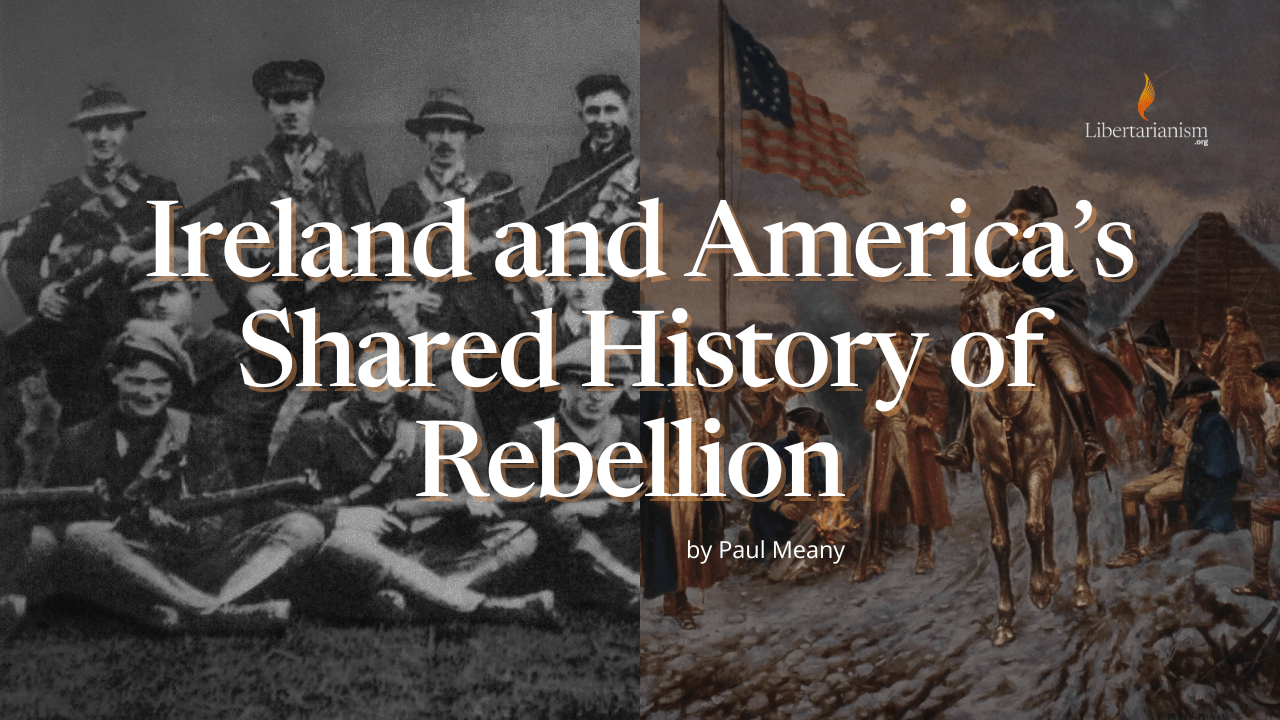
During the year of the 250th anniversary of American independence, Paul Meany reflects on how the American Declaration ultimately inspired Irish independence.
________________________________________________________________________________________
Videos and Podcasts
Governments typically respect certain basic rights, like the right to life, free speech, or private property. What happens when a government doesn’t recognize these rights? Does that translate into a lawless and violent society? What if the state did not exist at all? Does that mean laws don’t exist? Or that people don’t have rights?
For hundreds of years, thinkers have tried to answer this problem by attempting to understand the origin of laws and rights that would pre-date not only the state, but also societies themselves. One popular answer is found in the concept of “Natural Law.”
________________________________________________________________________________________
Featured Collections
Free Trade
In 1958, Leonard Read gave the world a deceptively simple parable: “I, Pencil.” In the humble voice of an ordinary wooden pencil, Read explained how something so unremarkable in daily life could only exist because of an extraordinary, global tapestry of human cooperation. Millions of people—loggers, miners, chemists, factory workers, truck drivers—contribute, often unknowingly, to the making of a single pencil. No one person knows how to make one from scratch, yet pencils exist in abundance because of the power of markets, prices, and voluntary exchange.
Decades later, this essay still resonates, but the world it described has transformed beyond recognition. That is why Larry Reed’s new work, “I, Smartphone,” provides such a timely and powerful update. If Read’s pencil symbolized the beauty of spontaneous order in a mid-twentieth-century world of wood, graphite, and rubber, Reed’s smartphone represents the breathtaking complexity of a twenty-first-century digital age—an object that depends on unimaginably intricate supply chains, rare earth minerals, satellite networks, microchips, and the labor of millions across continents.
________________________________________________________________________________________
Freedom of Speech
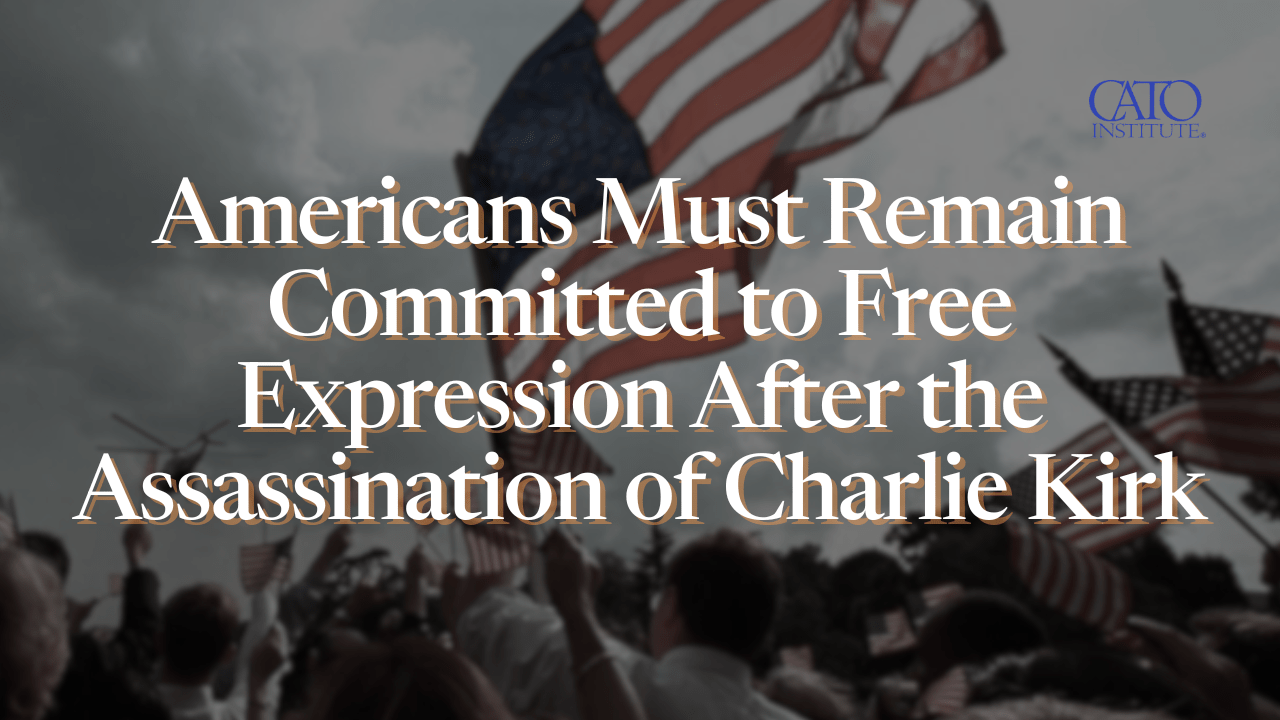
Free speech is tested most in times of crisis. The assassination of Charlie Kirk reminds us that silencing voices breeds only fear and division. We, the people, must unwaveringly protect each other’s rights. When we stop, we enable the government to chip away at the Constitutional protections our society is built upon. Government attempts to censor and control the responses to this tragedy are misguided. From Milton to Mill to the digital age, the libertarian case is clear: defend speech for all, trust liberty over fear.
Bad speech should be addressed with better speech.
Congress shall make no law respecting an establishment of religion, or prohibiting the free exercise thereof; or abridging the freedom of speech, or of the press; or the right of the people peaceably to assemble, and to petition the Government for a redress of grievances.
In many parts of the West, people can mostly develop and hold their own beliefs and express them freely. These liberties, known as Freedom of Conscience and Freedom of Speech, were part of the foundation that helped develop modern societies as we know them. Nonetheless, these interconnected ideas of freedom have historically been under threat, and the struggle to establish and protect these rights stretches over the past two thousand years.
________________________________________________________________________________________
Just Sentiments
The phrase “just sentiments” highlights the willful and cognitive aspect of sentiment, which is emphasized in Smith’s ethics. The sentiment that someone experiences is influenced by actions he took prior to the experience. And, during the experience, or immediately after it, the person can reflect on his having felt the sentiment. He asks himself: Should I affirm the sentiment? Should I revise it? Should I reject it? The experiencing of a sentiment can be seen as a matter of the will and thus of acting justly. “Just sentiments” suggests one’s responsibility for one’s sentiments.